The Hidden Fears of Managers — And Why Organizations Must Design Around Them
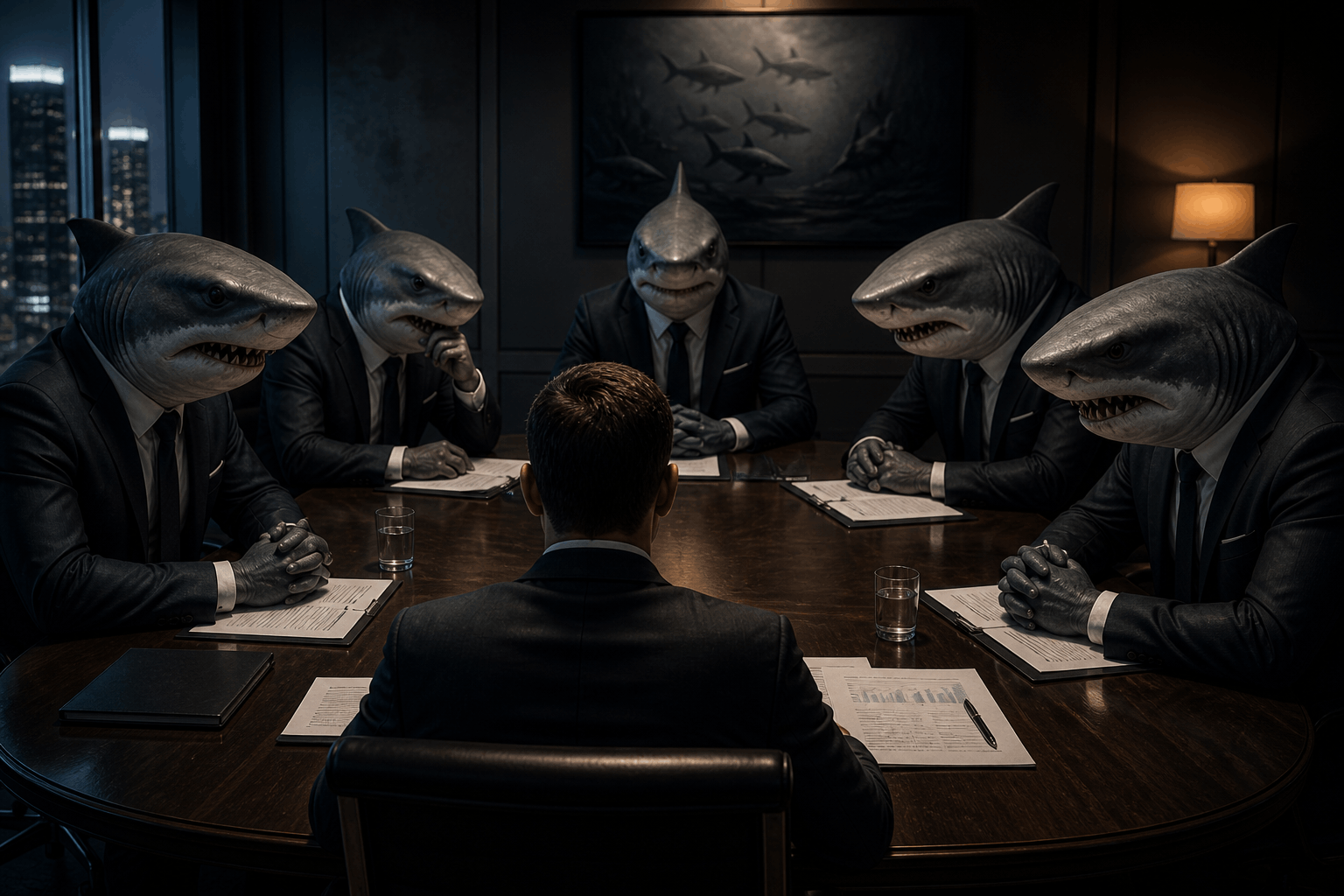
A deep dive into the hidden fears that shape managerial behavior and decision-making. This article explores how legal, financial, and psychological pressures influence leaders, why these fears are inevitable, and how organizations can design systems—through education, structure, and measurement—to prevent fear from driving decisions.
It usually starts quietly. A delayed decision. A tense meeting. A manager asking the same question again—not because the answer is unclear, but because something doesn’t feel safe.
From the outside, organizations appear structured and rational. Decisions are documented, strategies are presented, and performance is tracked. Yet beneath this visible order, something far less controlled is constantly shaping outcomes: fear. Not panic, not weakness, but a persistent force influencing how managers think, act, and decide.
In the modern world, this force has intensified. Organizations no longer operate in stable environments. Technology evolves faster than strategies can adapt. Customer behavior shifts unpredictably. Employees bring new expectations about autonomy and meaning. Markets react instantly to global signals. Managers are expected to bring clarity into this environment, to make decisions where data is incomplete and the future is uncertain. In earlier decades, experience was often enough to guide decisions. Today, experience alone is no longer sufficient. The result is pressure—and over time, pressure transforms into fear.
It is convenient to attribute managerial failure entirely to this external instability, but a significant portion originates internally. Many managers operate without the full set of competencies required by modern complexity. Some lack technical or financial literacy; others lack the emotional awareness needed to interpret people and situations accurately. In many organizations, individuals step into managerial roles not because they are fully prepared, but because there are no stronger alternatives. Position arrives before readiness, and when that happens, decision-making begins to rely on substitutes. What appears as intuition is often not experience distilled into judgment, but rather uncertainty disguised as confidence.
Over time, managerial fear takes on structure. It is not random; it tends to accumulate in three core domains: legal, financial, and psychological. Legal fear emerges from operating within dense regulatory frameworks where every decision carries potential consequences. Managers facing uncertainty in legal matters often shift from structured reasoning to emotional reassurance, seeking opinions, delaying decisions, and attempting to reach a point where they feel safe rather than where they are informed. Financial fear operates differently. Every decision has measurable consequences, yet when proper analytical tools are absent, managers tend to choose what feels less risky instead of what is objectively sound. This is where innovation is quietly rejected, not through explicit resistance, but through hesitation and delay. Organizations then fall into familiar competitive spaces, what Blue Ocean Strategy describes as “red oceans,” where competition is intense and differentiation is minimal. The illusion of safety replaces strategic thinking.
Psychological fear is the most visible of all. It reveals itself in behavior. A manager uncertain of their authority may become aggressive, raising their voice or publicly criticizing subordinates, mistaking control for leadership. A manager afraid of being outperformed may avoid open discussion, choosing informal influence over structured argument. Another, fearing exposure of incompetence, may delay decisions endlessly, involving more people, asking more questions, and distributing responsibility until accountability disappears. In all these cases, the behavior is different, but the source is the same: fear of losing control, status, or credibility.
What makes this especially critical is that such behaviors do not remain isolated. They shape teams, and over time, they shape organizational culture. Fear at the managerial level propagates downward, creating environments where hesitation replaces initiative and conformity replaces thinking.
At this point, the conclusion becomes unavoidable: fear is not an anomaly in management. It is a constant. Managers are not purely rational actors; they are biological systems influenced by stress, uncertainty, and consequence. Fear has always existed in leadership and will continue to exist. The objective, therefore, is not to eliminate it, but to prevent it from becoming the dominant force behind decisions.
This is where organizational design becomes decisive. Strong organizations do not rely on individual strength alone; they build systems that contain fear. The first of these systems is education—not occasional training, but continuous, structured development. Management has been studied extensively by thinkers such as Peter Drucker, Henry Mintzberg, Ichak Adizes, and Michael Porter, yet many organizations treat this knowledge as optional. In reality, it is foundational. Education replaces ambiguity with frameworks and gives managers a structured way to navigate uncertainty.
Equally important is psychological and behavioral training. Technical knowledge alone cannot sustain leadership under pressure. Managers must understand how fear manifests in their own behavior, how stress alters perception, and how authority influences communication. Without this awareness, even competent individuals can become ineffective when it matters most.
Another critical mechanism is the introduction of external perspective. Managers often operate within closed loops of thinking, especially under pressure. External consultants, structured peer reviews, and increasingly artificial intelligence systems provide a way to challenge assumptions and introduce objectivity. Unlike informal advice, these tools can systematically test decisions, highlight overlooked risks, and offer alternative strategies. They do not remove uncertainty, but they reduce isolation—and isolation is where fear grows strongest.
Finally, there is measurement. This is where intention becomes discipline. As Peter Drucker emphasized, what gets measured gets managed. Organizations that measure only financial outcomes miss the behavioral patterns that produce them. Strong organizations extend measurement into leadership itself, ensuring that decision-making, accountability, and performance are observed over time. This does not mean surveillance; it means direction. When managers know that their actions are consistently evaluated, they align more closely with organizational objectives rather than personal defensive instincts.
The distinction between organizations, then, is not whether fear exists, but how it is handled. In poorly designed systems, fear operates invisibly, distorting decisions and shaping behavior without resistance. In well-designed systems, fear is contained within structure, balanced by education, supported by tools, and guided by measurement.
Fear will always be part of management. The question is whether it remains hidden and uncontrolled, or whether it is acknowledged, understood, and ultimately governed by design.
Author

Shota Kvaratskhelia
Digital creator, entrepreneur, engineer