Weaponizing the work of Karl Marx: Interpreting the Implications of "Capital"
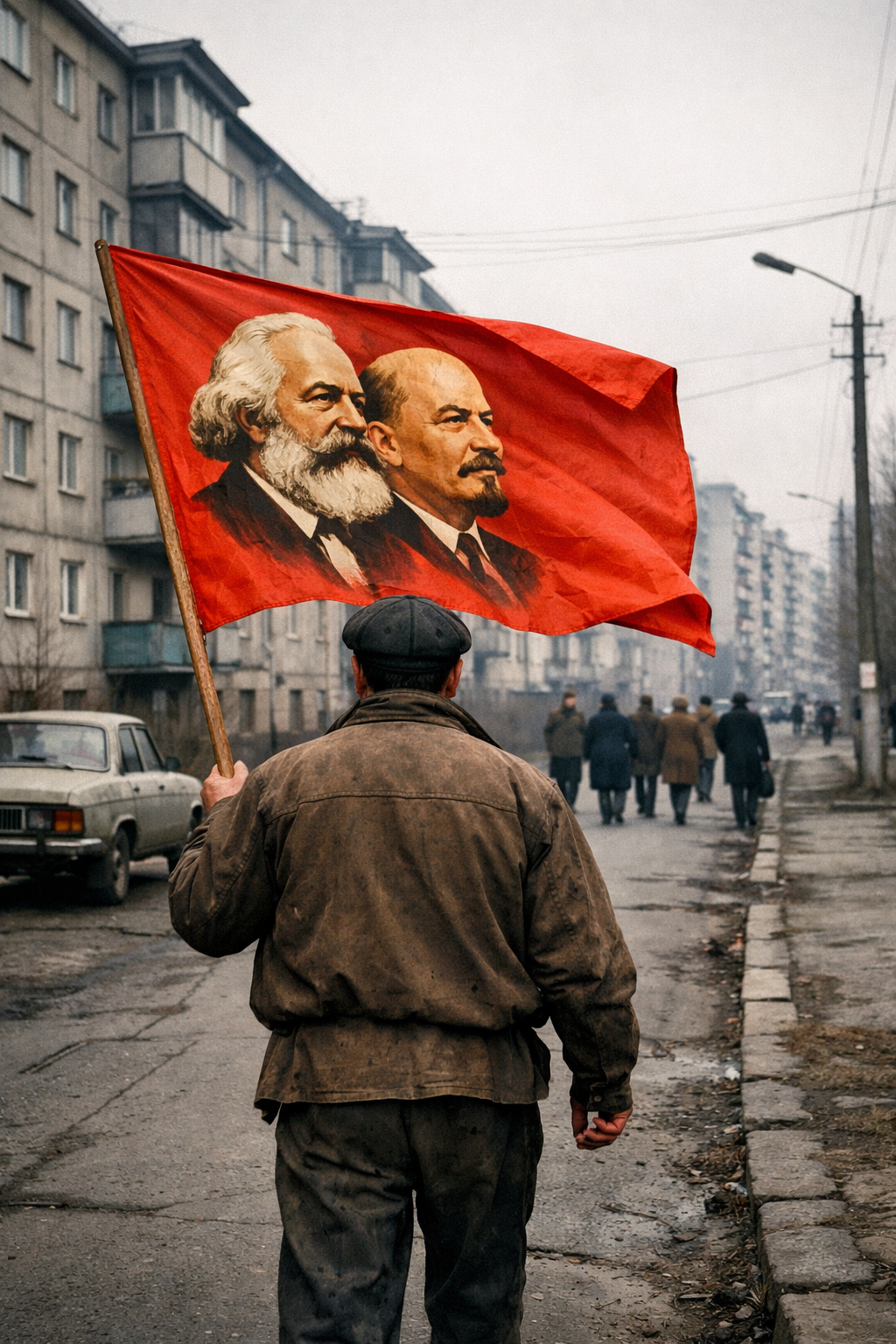
In the modern world, you no longer need to conquer territories with armies. You conquer minds. Moral authority, not physical force, is the most powerful weapon of influence. And in this sense, the work of Karl Marx became one of the most effective ideological tools in history — arguably more powerful than any nuclear arsenal. Capital did not conquer nations overnight. It reshaped values, legitimized narratives, and mobilized generations over decades. This article examines how philosophical ideas, when detached from limits and responsibility, can be weaponized — and why that danger has not disappeared.
Karl Marx, Capital, and the Moral Risk of Incomplete Ideas
I. What Marx Actually Analyzed
In Capital, Karl Marx set out to analyze the economic reality of his time: an early industrial system in which production was overwhelmingly dependent on human labor. Automation was primitive, information technologies were nonexistent, and productivity gains were achieved largely by intensifying labor rather than replacing it.
Within this historical context, Marx offered a detailed examination of how goods were produced, how value was realized, and how capital circulated. Although he avoided modern financial terminology, his work implicitly describes concepts that today would be recognized as fixed and variable costs, turnover of capital, economic depreciation of machinery, and margin dynamics driven by volume.
Marx also analyzed how money circulation increases effective capital and how competitive pressures force producers to reinvest in machinery and scale. In this sense, Capital is not merely philosophical—it is an early systems-level analysis of industrial production under capitalism.
At this descriptive level, Marx was often precise, perceptive, and historically accurate.
II. What Marx Underestimated or Marginalized
Where Marx’s analysis becomes fragile is not in what he observed, but in what he under-integrated.
1. Supply and demand as price-setters
Marx treats wages primarily as subsistence payments, with surplus value systematically appropriated by capital owners. However, even in his time, wages and prices were shaped by competition, scarcity, oversupply, and substitutability. Labor—like goods—was subject to market-clearing dynamics. Surplus was not guaranteed; losses were common; entire sectors operated below production cost, often surviving only through external support.
2. Risk and uncertainty
Production is not a mechanical transformation of labor into profit. Capital must be borrowed, serviced, and repaid. Inputs may fail, logistics may break, competitors may outperform, and demand may collapse. These risks existed in Marx’s era and remain central today. Marx mentions them, but does not structurally integrate them into his value theory.
3. Time and irreversibility
Capitalist reward is delayed, probabilistic, and asymmetric. Investment occurs upfront; returns, if they materialize at all, arrive over time. Bankruptcy is terminal. Many decisions cannot be undone. Labor wages, by contrast, are immediate and relatively certain. Ignoring time distorts the moral framing of surplus.
4. Human motivation and incentives
Humans act in response to incentives, comparison, and competition. Marx recognized harsh working conditions and limited labor mobility in early industrial society, but he underplayed the behavioral role of motivation once inside the system. Competition—between workers, firms, and innovators—was not an ideological invention; it was a human constant that capitalism channeled.
Systems that suppress incentives do not merely become inefficient; they become brittle.
III. The Evolution Marx Did Not Anticipate
Marx assumed that capitalism would intensify its contradictions faster than it could resolve them. History proved otherwise.
Modern economies evolved into mixed systems:
- Competitive markets constrained by institutions
- Labor protections and safety standards
- Antitrust regulation
- Separation of ownership and management
- Broad access to education
- Social safety nets
Technology fundamentally altered the production function. Value creation increasingly detached from labor hours and shifted toward knowledge, coordination, automation, and capital allocation. The modern firm no longer resembles the unitary “capitalist” of Marx’s model; power, risk, and reward are fragmented across shareholders, managers, creditors, regulators, and workers.
Capitalism adapted. Marxism, when implemented as a governing doctrine, did not.
IV. The Critical Question: Was Marx Naïve, Selective, or Something Else?
This brings us to the uncomfortable—but necessary—question: Was Marx simply wrong, or was his analysis deliberately framed in a way that enabled later misuse?
The answer is neither stupidity nor conspiracy.
Marx was a philosopher, not a policy engineer. He wrote a critique, not a governing blueprint. His method emphasized moral clarity over systemic balance. He isolated exploitation as the dominant explanatory variable and bracketed complexity that would weaken that framing.
This was a methodological choice.
But it came with consequences.
Marx briefly acknowledged competition, reinvestment, risk, and innovation—yet did not integrate them deeply enough to challenge his central thesis. That omission mattered, because ideas do not remain confined to books.
V. From Critique to Catastrophe: When Ideas Become Dogma
The true disaster began when later political movements—most notably the Soviet Union—treated Marx not as a critic of early capitalism, but as a prophet of historical inevitability.
At that point:
- Critique became doctrine
- Theory became state policy
- Abstraction became coercion
Economic systems were redesigned in defiance of human motivation, incentive structures, and informational limits. When reality resisted, it was not revised—it was suppressed. The result was not merely inefficiency, but famine, repression, fear, and the destruction of millions of lives.
These outcomes were not accidents. They were the predictable result of ideology overriding human nature.
VI. Intellectual Power and Moral Responsibility
This is the central warning of this essay.
The greater the influence of an idea, the greater the responsibility of the thinker.
Marx did not design totalitarian states. He did not order repression. He did not profit from suffering. But he framed history as deterministic, minimized uncertainty, and failed to emphasize the provisional nature of his conclusions. That framing invited absolutism. History shows that the most dangerous ideas are not lies, but partial truths enforced as total explanations. This is not unique to Marx. Science, economics, and philosophy have all been weaponized before—sometimes sincerely, sometimes cynically. The danger lies not only in bad intentions, but in ideas stripped of context, limits, and humility.
VII. Final Conclusion
Marx was neither stupid nor evil. He was a brilliant analyst of a specific historical phase of capitalism. His greatest contribution was identifying real tensions. His greatest error was mistaking those tensions for destiny. Capitalism survived Marx’s critique because it adapted. Marxist states collapsed because they could not. The lesson is not ideological—it is ethical:
When analysis is detached from human behavior, incentives, uncertainty, and time, and when it is later used as a political weapon, societies pay the price.
Ideas shape power. Power amplifies consequences. And incomplete ideas, once absolutized, can become instruments of catastrophe. That is the responsibility we must never forget.
Author

Shota Kvaratskhelia
Digital creator, entrepreneur, engineer